How Do I Train Around a Part-Time Job and a Full Class Load?
Quick Answer: Stop looking for an hour and start looking for three twenty-minute windows. Working students who train consistently almost always use fixed anchors tied to existing routines - before a shift, between classes, immediately after a lecture - rather than a scheduled gym time that any change to the timetable destroys. Two or three short full-body sessions a week maintains and builds strength for most people. Build the week around the shifts you can’t move, keep a bodyweight fallback for the days everything collapses, and protect sleep ahead of any workout.
You’re not short of discipline. You’re trying to schedule an hour-long activity into a week that doesn’t contain a free hour, and then treating the failure as a character issue.

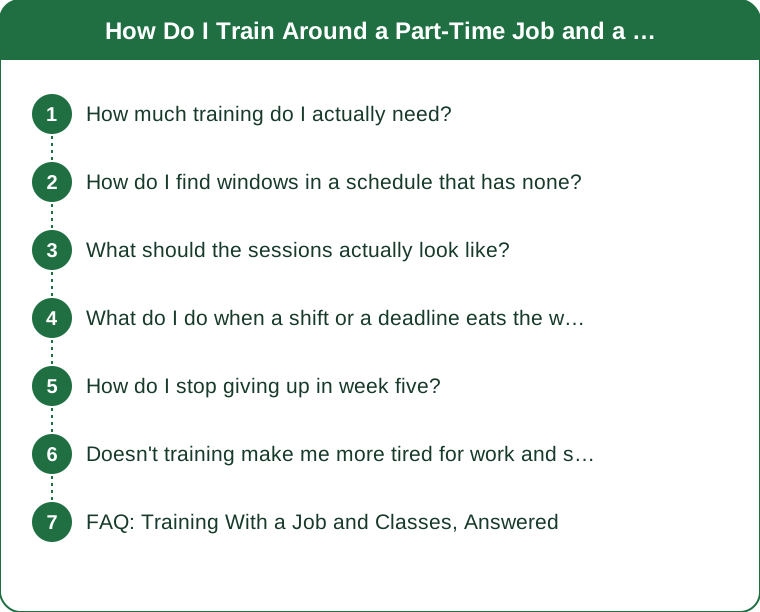
How much training do I actually need?
Less than you think, if it’s consistent. General physical activity guidance for adults centres on around 150 minutes of moderate activity a week plus muscle-strengthening on two or more days. That’s achievable in two or three sessions plus walking, not five gym trips.
Two full-body strength sessions a week is a genuinely effective programme. Hitting each muscle group twice weekly is a well-supported approach, and two sessions of thirty to forty minutes covers it for someone building rather than competing.
Walking between campus buildings counts more than people credit. If you’re covering several kilometres a day on foot between classes and shifts, a substantial chunk of the moderate-activity target is already handled without any planning.
Short sessions aren’t a compromised version of long ones. A focused twenty-five minutes with minimal rest and compound movements produces real adaptation. The version that doesn’t work is ninety minutes at the gym where forty of them are on a phone.
And consistency across a term beats intensity across a fortnight. Three months of two-a-week beats three weeks of five-a-week followed by nothing, by a very large margin.
The practical target: two strength sessions plus deliberate walking. Anything above that is a bonus, and treating it as a bonus rather than a requirement is what keeps the habit alive through exam periods.
How do I find windows in a schedule that has none?
Map the week once, honestly, on paper. Every class, every shift, every commute. The gaps become visible immediately and they’re never where people assume - it’s usually the ninety minutes between a morning class and an afternoon shift, not the evening.
Anchor sessions to things that already happen. Immediately after your last Tuesday class. Before your Thursday shift. On the way back from campus. An anchored session survives a chaotic week; a session scheduled for a floating time slot doesn’t.
Use the gap you already spend on campus. The rec centre between classes is a far more reliable window than an evening trip back out, and it removes the extra commute entirely.
Treat the commute as training where you can. Walking or cycling one leg of a journey adds real activity without needing a slot, and it’s the change that survives the worst weeks.
Batch the admin. Kit packed the night before, in the bag, ready. The friction that kills short sessions is almost never the exercise - it’s realising your trainers are at home.
And accept a two-slot week as normal. Planning four and hitting two feels like failure. Planning two and hitting two feels like success. Same training, entirely different relationship with it.
What should the sessions actually look like?
Full body, compound movements, minimal equipment. A squat pattern, a hinge, a push, a pull, and something for the core. Five movements covers the body, and it means missing a session doesn’t leave a gap in your programme.
Two to three sets each, ending a couple of reps short of failure. This is enough stimulus for meaningful progress, and it leaves you able to work a shift afterwards, which matters more than squeezing out the last rep.
Superset opposing movements to save time. Push and pull back to back, then squat and hinge back to back. It halves the rest time without reducing the work.
Keep a bodyweight version of the same session. Squats, hip hinges, press-ups, rows on a table or bar, and a plank. When the gym is packed, the shift ran late, or you’re in your room at eleven at night, the fallback is what keeps the streak.
Progress by adding reps before adding weight. It’s simpler to track on a phone note and it works fine for the first several months of training.
And keep a written log, however scrappy. On a schedule this fragmented you genuinely won’t remember what you did last time, and progression requires knowing.

What do I do when a shift or a deadline eats the week?
Drop to the minimum rather than to zero. One session that week. Ten minutes if that’s what exists. The habit is the asset, and a small session preserves it in a way that a skipped week doesn’t.
Protect sleep ahead of training, always. Training on genuinely inadequate sleep while working and studying is a poor trade - recovery is where adaptation happens, and under-slept sessions are worse sessions with a higher injury risk.
Use movement snacks on the worst days. Five minutes of squats and press-ups between study blocks, a walk between shifts, stairs instead of the lift. It’s not a workout and it’s not meant to be; it keeps you moving and it helps concentration.
Plan around the known pressure points. Exam periods and end-of-term shift increases are predictable. Deciding in advance that those weeks are maintenance weeks removes the guilt and the decision fatigue.
Eat enough, particularly on shift days. Under-eating while working, studying, and training is the most common reason student training feels harder than it should. Portable protein and a real meal after a shift matter more than any supplement.
And restart without a penalty week. After a gap, go back to the same session at slightly lower volume. People who insist on a punishing return session are the ones who don’t come back.
How do I stop giving up in week five?
Lower the bar to something you’d hit on your worst week. If the plan only works on a good week, it’s not a plan - it’s an aspiration. A plan you can complete during exams is the one that survives.
Track completion, not performance. Two ticks a week on a calendar is a better metric for this stage of life than personal bests, and it’s much more motivating when your schedule is chaotic.
Train with one other person on the same timetable. A classmate with the same gap between lectures is worth more than any app, because the session gets scheduled by two people instead of one.
Have a specific fallback for the two most likely failure modes. Gym packed at 5pm, and shift ran over. Decide now what you do in each case, and the decision doesn’t cost you the session later.
Notice non-scale outcomes. Better sleep, steadier energy on shift, less back pain from carrying a bag. These arrive well before visible change and they’re what actually keeps people going.
And expect the first three weeks of term to be the hardest. New timetable, new shifts, everything unsettled. The routine gets easier once the schedule stops changing - which it does, usually around week four.
Doesn’t training make me more tired for work and study?
Short-term yes, over a term no. A session leaves you tired for a while. Regular moderate activity is consistently associated with better sleep quality, better mood, and better perceived energy over time - which is the horizon that matters when you’re doing this for a whole semester.
Concentration usually improves rather than degrades. Many students find a short session before a study block improves focus, and using training as a break from study rather than a competitor for study time reframes the whole thing.
Timing near a shift is worth testing individually. Some people train well before a shift; others find it wrecks the second half. It’s worth two weeks of experimenting rather than assuming.
Watch the total load, not just the training. Twenty hours of work plus a full course load plus five gym sessions plus a poor sleep schedule is genuinely too much, and the correct response is reducing training rather than pushing through.
And take fatigue that doesn’t resolve seriously. This is general information, not medical advice. Persistent exhaustion, dizziness, or a mood change that doesn’t lift with rest is worth taking to student health services rather than training through.
Fuel and hydrate around shifts. A long shift on a skipped lunch followed by a training session is where most student energy crashes come from, and it’s fixable with a packed snack rather than a programme change.
FAQ: Training With a Job and Classes, Answered
How many workouts a week do I need as a working student?
Two full-body strength sessions plus deliberate walking covers general activity and strength guidance for most people. Planning two and hitting two beats planning five and hitting two.
When’s the best time to train with a packed timetable?
Whichever slot is anchored to something that already happens - straight after a specific class, before a specific shift. Floating slots get eaten; anchored ones survive.
Are twenty-minute workouts long enough?
Yes, if they’re focused. Five compound movements, two to three sets each, short rests. The variable that matters most at this stage is whether the session happens at all.
What do I do during exam weeks?
Declare them maintenance weeks in advance. One short session plus walking, no guilt. Deciding this ahead of time removes the decision and the sense of failure.
TL;DR:
- Look for three twenty-minute windows, not one free hour - the hour doesn’t exist and the windows do.
- Two full-body strength sessions a week plus deliberate walking meets general guidance and builds real strength.
- Anchor sessions to things that already happen: after a specific class, before a specific shift.
- Keep a bodyweight fallback session for the days the gym, the shift, or the timetable defeats you.
- Protect sleep ahead of training, plan exam weeks as maintenance weeks, and track completion rather than performance.
A plan that only works on a good week isn’t a plan. Build the one you’d still complete during finals.
Keep Reading
This article is for general informational and styling purposes only. Fit, sizing, and product availability may vary.