Eating on a Meal Plan Without Wrecking Your Training: Your Questions Answered
Quick Answer: Build every plate the same way: a palm-sized protein first, then vegetables, then a carbohydrate portion matched to your training that day. The dining hall’s actual risks are not the food available but the unlimited format, the erratic timing around class schedules, and the drinks and dessert station. Eat at consistent times, put protein on the plate before anything else, and treat the soft-serve machine as a two-or-three-times-a-week thing rather than a daily one.
A meal plan is genuinely one of the better nutrition situations you will ever have - someone else cooks, there is always protein, and there are vegetables you did not have to buy. The questions below are the ones people actually ask in the first term.

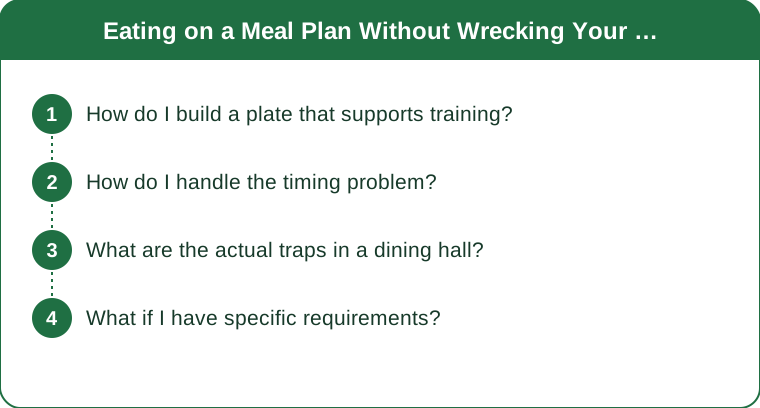
How do I build a plate that supports training?
What is the basic template?
Protein first, always. Put it on the plate before you look at anything else, because it is the thing most likely to be crowded out. A palm-sized to one-and-a-half-palm portion - grilled chicken, eggs, fish, beans, tofu, cottage cheese from the salad bar.
Then vegetables, filling roughly a third to a half of the plate. Then carbohydrate, sized to your day: more on training days, less on days you sat in lectures.
How much protein do I actually need?
If you are training regularly, the commonly cited range is 1.2 to 1.6 g per kg of bodyweight daily, higher if you are trying to build muscle. For a 65 kg person that is roughly 80 to 105 g a day - which works out to about 25 to 35 g at each of three meals. That is two eggs plus yogurt at breakfast, a chicken portion at lunch, and a fish or meat portion at dinner. Achievable, but not by accident.
What are the highest-protein options usually available?
The grill station, the salad bar’s eggs and cottage cheese and beans, the deli counter, breakfast eggs (usually available all day at many halls), Greek yogurt, and milk. Milk is the most underused - two glasses across a day adds around 16 g of protein for no effort.
What if the protein options look unappealing?
The salad bar is nearly always the fallback: hard-boiled eggs, chickpeas, beans, cheese, tuna, and cottage cheese are typically there daily regardless of what the hot line is serving.
How do I handle the timing problem?
My classes do not line up with dining hall hours. What do I do?
This is the most common practical issue and it needs a stocked room rather than a dining hall solution. Keep in your room: instant oats, nut butter, tinned tuna or salmon, protein powder if you use it, fruit, and a box of long-life milk. The goal is that a missed dining hall window costs you convenience rather than a meal.
Does it matter if I eat at different times each day?
Somewhat. Irregular meal timing is associated with worse appetite regulation and glucose handling than consistent timing. More practically, an erratic schedule leads to long gaps followed by very large meals, which is the pattern most likely to leave you feeling terrible.
Should I eat before or after training?
Both if you can. Something with carbohydrate 1 to 2 hours before, and protein plus carbohydrate within a couple of hours after. The post-training meal matters more than the precise timing - the narrow anabolic window idea has been substantially walked back, and total daily protein matters more than hitting a 30-minute deadline.
What about early morning training?
If the dining hall is not open, something small and familiar from your room - a banana and a spoon of nut butter, or a shake - is better than training completely fasted for a hard session. For easy sessions, fasted is fine if it suits you.

What are the actual traps in a dining hall?
Is it the food or the format?
The format. Unlimited portions remove the natural stopping cue of a finished plate, and going back up is socially normal, so people eat past fullness routinely without noticing. Serve yourself once, sit down, and decide about seconds after ten minutes. That single pause resolves most of it.
What about drinks?
The most commonly underestimated factor. Soft drink fountains, juice, sweetened coffee drinks, and sports drinks can add several hundred calories a day with no satiety at all. Water and milk are the two that earn their place.
Is dessert really a problem?
Availability is the problem, not dessert itself. A soft-serve machine present at every single meal turns an occasional thing into a daily one. Deciding in advance which meals include dessert - a few times a week - works far better than deciding each time while standing in front of it.
What about late-night dining?
The common pattern is a light dinner followed by heavy late-night eating, which is usually a sign that dinner was too small or too low in protein. Fix dinner and late-night eating tends to reduce on its own.
Should I worry about weight gain in first year?
Some change is normal and expected. The drivers when it does happen are usually the liquid calories, the alcohol, the late-night eating, and a large drop in daily movement compared to school - not the dining hall food itself. Walking around campus rather than taking shuttles addresses a surprising amount of it.
What if I have specific requirements?
I am vegetarian or vegan. Is the dining hall enough?
Usually, with attention to protein. Beans, lentils, tofu, tempeh, and soya milk are the staples; most halls have at least two available daily. Pay attention to B12, iron, and total protein, since plant proteins are typically less dense per serving - which means you need larger portions rather than the same portion of something else. Most universities have a dietitian available, and it is worth using them.
I am training seriously for a sport. Is a meal plan sufficient?
Generally yes, and often better than self-catering, but you will need larger portions and more frequent eating than the standard three sittings allow. Take an extra piece of fruit and something protein-based back to your room when permitted, and use the room supplies for the gaps.
I have allergies or celiac disease. How do I manage?
Contact dining services directly and early - most universities have allergen protocols, labelled stations, and staff who can advise on cross-contamination. This is a conversation to have in the first week rather than after a reaction.
I am trying to lose or gain weight. Does a meal plan make that harder?
Not inherently. For gaining, the unlimited format is an advantage - use it, and add milk and extra portions. For losing, the plate template plus serving once handles most of it without any tracking. What makes either difficult is the absence of a plan, not the presence of a buffet.
This is general information, not medical advice. If eating feels stressful or preoccupying, university health services are a good first stop and the conversation is more routine than it feels.
TL;DR:
- Protein on the plate first, then vegetables, then carbohydrate sized to your training day.
- Aim for 25 to 35 g of protein per meal if you train - milk and the salad bar’s eggs and beans are the easy additions.
- The traps are the format, the drinks, and the constant dessert availability - not the food itself.
- Serve once, sit down, decide about seconds after ten minutes.
- Keep oats, nut butter, tinned fish, and long-life milk in your room for the hours the hall is shut.
A meal plan is a good nutrition setup handed to you for free. It just has no default strategy built in - and the plate template plus a stocked room covers almost everything the first term will throw at it.
Keep Reading
This article is for general informational and styling purposes only. Fit, sizing, and product availability may vary.