Dorm Room Workouts With Zero Equipment: Your Questions, Answered
Quick Answer: Yes, you can build real strength and fitness in a dorm room with zero equipment using bodyweight exercises like squats, push-ups, lunges, planks, and glute bridges — the limiting factor is consistency and progressive difficulty, not equipment access.
Between tiny rooms, roommates, and zero equipment budget, dorm fitness feels harder than it should. Here are the real questions students ask, answered straight.
Can you actually build muscle with just bodyweight exercises in a dorm room?
Yes — bodyweight training builds real strength and muscle, especially for beginners to intermediate lifters. The key is progressive overload even without weights: doing more reps, slower tempo, single-leg variations (like Bulgarian split squats using a chair), or shorter rest periods over time to keep challenging your muscles.
How much space does a dorm-room workout actually need?
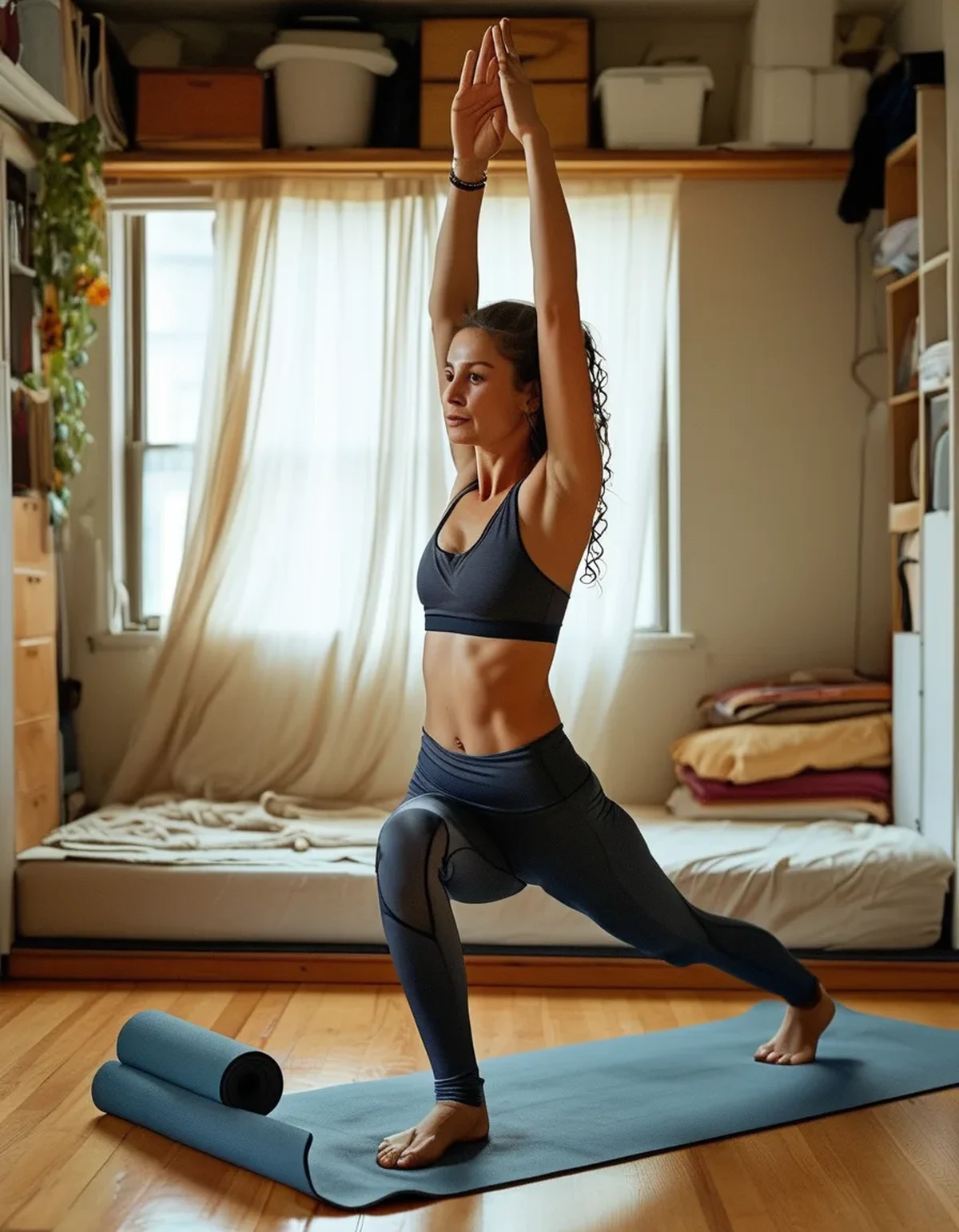
A 6x6 foot area is genuinely enough for the vast majority of bodyweight exercises — squats, push-ups, lunges, planks, and mountain climbers all fit in that footprint. If your room is tighter than that, exercises like wall sits and standing core work need almost no floor space at all.
What if your roommate is around or sleeping — how do you keep a workout quiet?
Skip jumping movements (burpees, jump squats, high knees) and stick to controlled, non-impact exercises like slow squats, push-ups, planks, and glute bridges — these produce almost no noise or floor vibration compared to plyometric moves.

What can you actually use as makeshift equipment in a dorm?
A sturdy chair works for step-ups, tricep dips, and Bulgarian split squats. A full backpack loaded with books becomes a weight for squats, rows, or overhead presses. A towel adds resistance for sliding lunges or core work on hard floors.
How often should a dorm-room bodyweight routine be done per week?
3-4 sessions per week of 20-30 minutes is a solid, sustainable starting point — enough to build real progress without requiring more time than a busy student schedule realistically allows, with at least one rest day between sessions targeting the same muscle groups.
Is a bodyweight-only routine actually enough, or do you eventually need a gym?
Bodyweight training can take you quite far, especially in the first 6-12 months of consistent training, but if your goal is heavy strength gains or serious muscle growth long-term, adding external resistance (gym access, resistance bands, or dumbbells) eventually helps continue progress once bodyweight variations stop feeling challenging.
FAQ: Dorm Workout Questions, Answered
Do you need a yoga mat for dorm workouts?
Not strictly required, but a mat or folded towel protects your knees and spine during floor exercises and makes the workout more comfortable on hard dorm flooring.
What’s a realistic weekly schedule for a busy student?
Many students do well with a simple push/pull/legs-style rotation across 3-4 short sessions, fitting workouts between classes or before bed rather than needing one long dedicated block.
Can these workouts help with the “freshman 15” specifically?
Consistent bodyweight training combined with reasonably balanced dining hall choices absolutely supports weight management — exercise alone rarely offsets a consistently high-calorie diet, so both matter together.
TL;DR:
- Bodyweight training builds real strength and muscle without any equipment
- A 6x6 foot space is enough for nearly every core dorm exercise
- Skip jumping moves for quiet, roommate-friendly sessions
- A chair, backpack, or towel can serve as makeshift equipment
- 3-4 sessions of 20-30 minutes weekly is a sustainable starting cadence
Dorm fitness isn’t about working around a lack of equipment — bodyweight training was never actually equipment-dependent to begin with.
Keep Reading
This article is for general informational and styling purposes only. Fit, sizing, and product availability may vary.