The Silent Dorm Workout: Training Without Enraging the Downstairs Neighbor
Quick Answer: A quiet dorm workout swaps every jumping or high-impact move for slow-tempo strength work and isometric holds — think 5-second-down squats, wall sits, and planks instead of burpees and jump squats. Done on socked or bare feet with a towel underfoot, a full circuit produces real muscle fatigue with almost no floor noise.
The dorm has one unwritten rule nobody puts on a syllabus: thou shalt not thunder. Burpees at 7am turn you from neighbor into legend, and not the flattering kind. The quiet workout is a real training style — slower, sneakier, and honestly harder than it sounds.

How do you work out in a dorm without making noise?
The trick isn’t doing less — it’s removing momentum. Tempo work replaces jumping as your main tool: a 5-second-down squat, a slow-controlled pushup, a 3-second lunge on the way down. Take away the bounce and the muscle has to do all the work instead of gravity doing half of it.
This isn’t a downgrade from a “real” workout. Slowing the eccentric (lowering) portion of a movement is a standard strength-training technique used well outside of noise-conscious dorms, because time under tension is one of the main drivers of muscle fatigue. You’re not settling for a quieter version of the workout — you’re doing a harder version that happens to be silent.
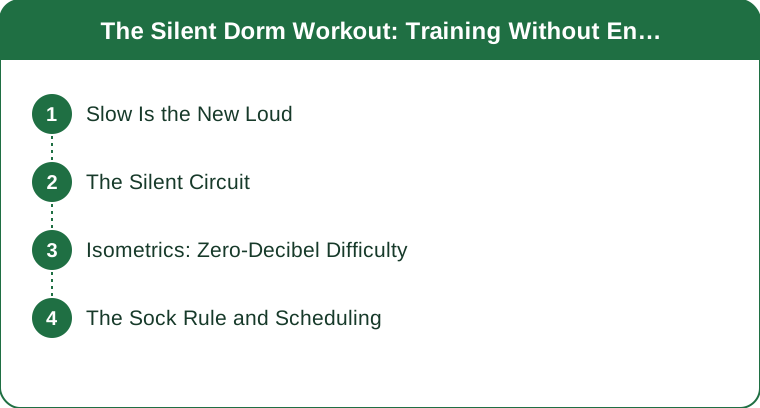
What’s a full silent circuit you can actually follow?
Here’s the go-to sequence, no equipment required:
- Tempo squats — 10 reps, 5 seconds on the way down
- Knee or full pushups — 10 reps, slow and controlled
- Glute bridges — 15 reps
- Side plank — 20 seconds each side
- Wall sit — 30 seconds
Run through three rounds total, resting as needed between exercises. The total noise output is roughly one determined exhale and maybe a groan on round three — nothing that travels through a floor.

Why are isometric holds the secret weapon for quiet training?
Isometrics — wall sits, planks, hollow body holds — are exercises where nothing moves and everything burns. There’s no impact, no footfall, no equipment clanging against a desk. Just muscles under constant tension while you stare at the ceiling and question your life choices.
The downstairs neighbor hears absolutely nothing. Your quads, on the other hand, will have opinions about this workout well into tomorrow. Isometric holds are also genuinely useful for building the kind of stability strength that carries over into everyday balance and posture, not just a noise-avoidance trick.
If you’re dealing with an existing joint issue, especially in the knees or lower back, it’s worth checking with a doctor or physical therapist before loading up on wall sits and planks — isometric holds are generally low-risk, but “low-risk” isn’t the same as “risk-free” for everyone.
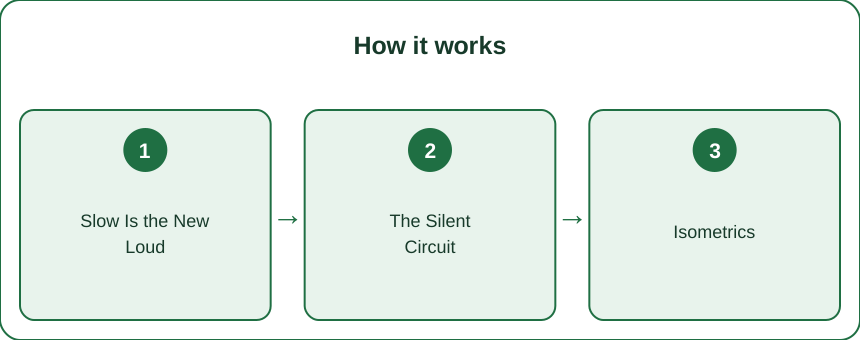
What else keeps a dorm workout from disturbing the room below you?
Footwear matters more than people expect. Grippy socks or bare feet beat sneakers on a dorm floor, since rubber soles telegraph every shift in weight straight into the boards. A folded towel doubles as a makeshift yoga mat if you don’t own one, and it adds a little extra sound dampening as a side benefit.
Timing helps too — sticking to workouts before your building’s quiet hours removes the guesswork entirely, so you’re not relying on technique alone to keep the peace. Considerate gains are still gains. Arguably smugger ones, since you’re building strength and staying on your RA’s good side at the same time.
Myth vs Fact: Quiet Workouts
Myth: A workout without jumping can’t build real strength or burn real calories. Fact: Tempo and isometric training are staples in legitimate strength programs, not just noise-friendly substitutes. Slowing a movement down increases time under tension, which is one of the core levers for muscle growth — you’re changing the stimulus, not weakening it.
Myth: You need dumbbells or resistance bands to make a silent workout challenging. Fact: Bodyweight tempo work gets uncomfortable fast without any equipment at all. A slow pushup or a 30-second wall sit humbles plenty of people who lift regularly at the gym.
Myth: Quiet workouts are only for beginners. Fact: Advanced lifters use tempo and isometric techniques deliberately to break through plateaus. The dorm-noise constraint just happens to force everyone into a method that’s useful at every level.
FAQ: Quiet Dorm Workouts
Can you actually build muscle with a no-jump, no-equipment dorm workout?
Yes — tempo squats, slow pushups, and isometric holds like wall sits and planks all create real muscular fatigue through time under tension rather than impact. Consistency matters more than adding jumping or heavy equipment.
How long should a silent dorm workout take?
The sample circuit above — five exercises for three rounds — typically takes 20 to 25 minutes including short rests between moves, which fits comfortably before class or in the evening before quiet hours start.
What if my dorm room is too small to work out in?
Most of these moves need less space than a yoga mat — wall sits and pushups need almost none, and squats and lunges just need enough room to extend your limbs. Push a desk chair aside and you likely already have enough floor space, and it pairs well with the rest of a broader college fitness routine once you’re ready to add more.
TL;DR:
- Replace jumping moves with slow-tempo squats, pushups, and lunges to eliminate floor noise.
- The core silent circuit: tempo squats, pushups, glute bridges, side plank, and a wall sit for 3 rounds.
- Isometric holds like wall sits and planks build strength with zero impact and zero decibels.
- Grippy socks or bare feet, plus a folded towel as a mat, cut down noise further.
- Check with a doctor or PT first if you have existing joint issues before loading up on holds.
Keep Reading
This article is for general informational and styling purposes only. Fit, sizing, and product availability may vary.