How Do You Keep Any Fitness Routine Going During Finals Week?
Quick Answer: During finals week, scale your routine down to short, low-planning sessions — 10-15 minute walks or bodyweight circuits between study blocks — rather than skipping movement entirely, since even brief activity measurably helps focus and stress during high-cognitive-load periods.
Your normal gym routine feels impossible to maintain with finals looming, so the instinct is to pause it completely. A scaled-down version usually serves you better than an all-or-nothing approach.

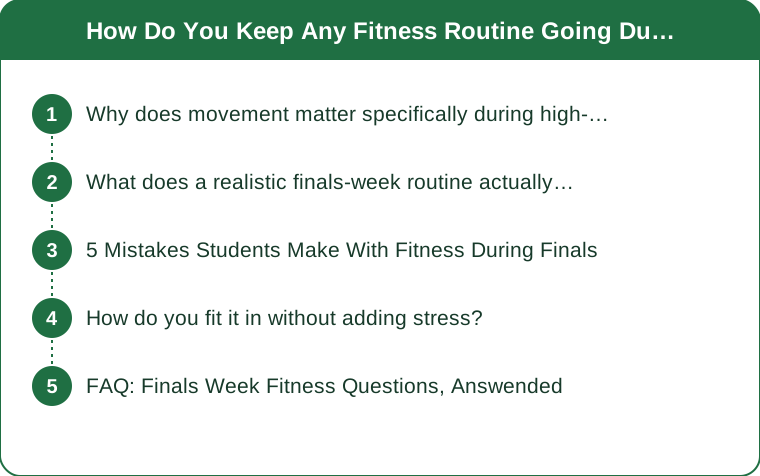
Why does movement matter specifically during high-stress study periods?
Short bouts of physical activity are linked to improved focus and reduced stress hormone levels in the hours afterward — which directly supports the studying you’re trying to protect time for, rather than competing with it.
Skipping movement entirely to ‘save time’ often backfires: accumulated stress and mental fatigue reduce study efficiency more than a 15-minute break costs in time.
What does a realistic finals-week routine actually look like?
10-15 minute sessions, zero planning required:
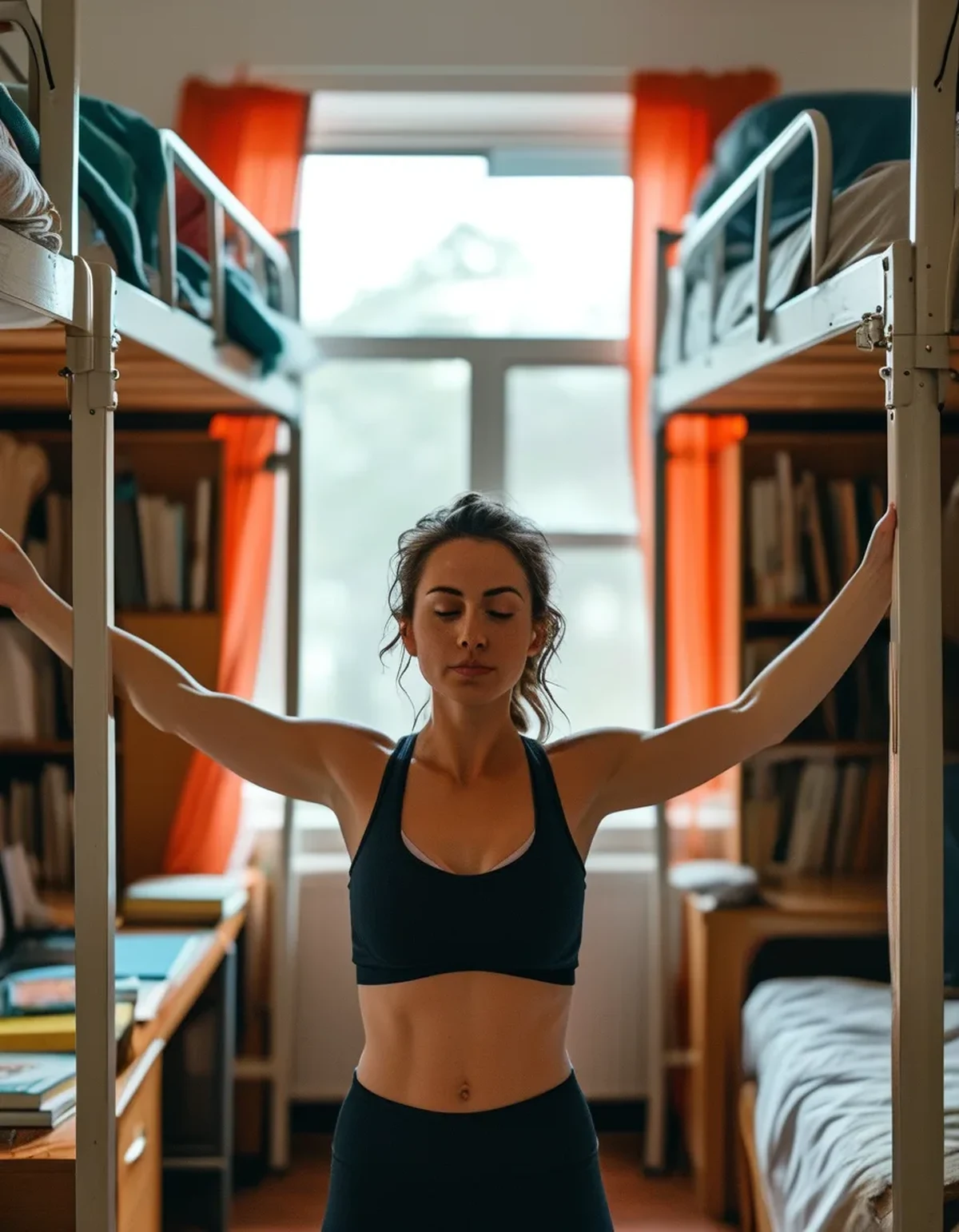
- A brisk walk between study blocks (also doubles as a mental reset)
- A bodyweight circuit — squats, push-ups, planks — no equipment, no gym trip needed
- Stretching directly at your desk during a study break
The goal during finals isn’t progress on a program, it’s simply staying consistent enough that the routine doesn’t fully collapse and need rebuilding afterward.
5 Mistakes Students Make With Fitness During Finals
1. All-or-nothing thinking — skipping entirely because a full gym session isn’t possible.
2. Scheduling workouts at fixed gym-class times that don’t flex around unpredictable study needs.
3. Using workout time as another source of guilt instead of stress relief.
4. Replacing sleep with study time, which undermines both memory consolidation and recovery.
5. Forgetting that a walk counts — students often only count ‘real workouts,’ dismissing genuinely useful shorter movement.
How do you fit it in without adding stress?
Attach movement to an existing break, don’t schedule a new one — a walk during a coffee run or a stretch during a study group pause requires zero extra planning, which is exactly what a high-stress week needs.
Set a low bar on purpose: ‘10 minutes counts’ removes the psychological barrier that an ambitious full workout goal creates when energy and time are both limited.
FAQ: Finals Week Fitness Questions, Answended
Is it okay to completely stop working out during finals?
It’s common, but a scaled-down version tends to help stress and focus more than full stopping — even brief movement has a documented benefit during high-cognitive-load periods.
Does a 10-minute workout actually do anything?
Yes — brief activity measurably affects mood and focus in the following hours, even if it’s not enough to build strength or endurance on its own.
How do I get back to my normal routine after finals end?
Ease back in over a few days rather than jumping straight to your pre-finals intensity — a short break plus stress fatigue means a slightly lighter reintroduction reduces injury risk.
TL;DR:
- Short 10-15 minute sessions beat skipping movement entirely during finals
- Brief activity measurably supports focus and reduces stress during high-cognitive-load periods
- Attach movement to existing breaks instead of scheduling new ones
- Ease back into your normal routine gradually once finals end
A scaled-down routine that survives finals week beats an ambitious one that collapses by day two.
Keep Reading
This article is for general informational and styling purposes only. Fit, sizing, and product availability may vary.