How Do I Stay Consistent With Fitness When My Class Schedule Changes Every Semester?
Quick Answer: The most reliable fix is anchoring workouts to a recurring event that doesn’t change each semester (like right after your last class of the day, whatever time that is) rather than a fixed clock time, combined with a rotating 2-3 workout menu you can slot into whatever window is free that week.
A schedule that changes every 16 weeks makes fixed-time routines fall apart fast, which is exactly why anchoring to an event instead of a clock time works so much better for students.

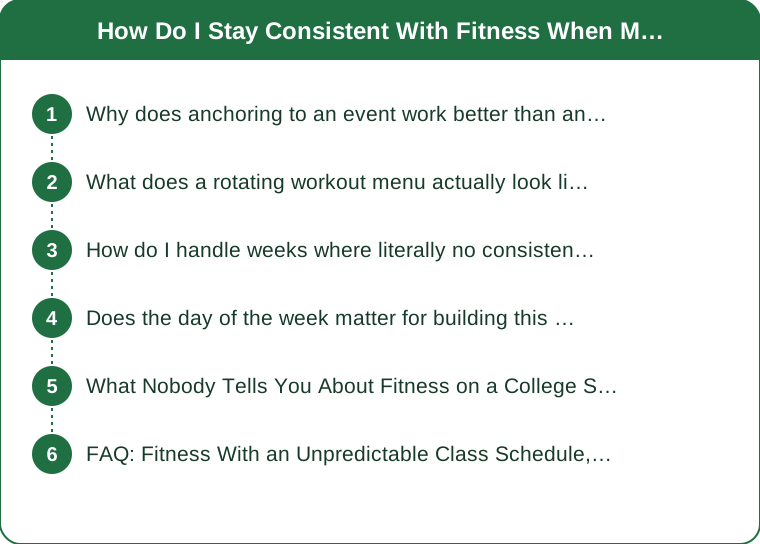
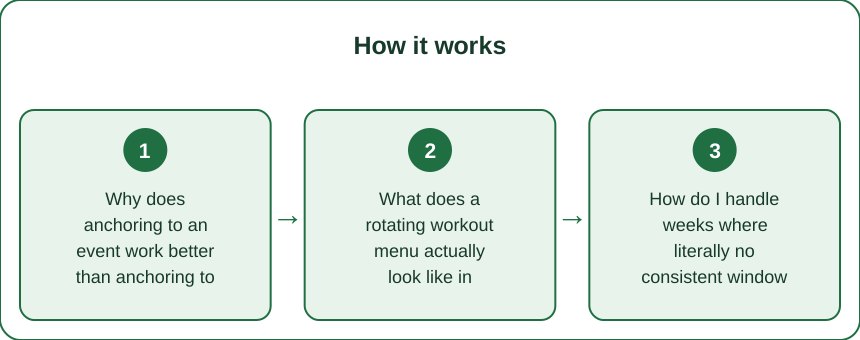
Why does anchoring to an event work better than anchoring to a clock time?
A clock-time habit (‘I work out at 5pm’) breaks the moment your schedule shifts, but an event-anchored habit (‘I work out right after my last class’) survives every semester’s schedule change because the trigger moves with you automatically. This single shift in habit design solves most of the consistency problem before it starts.
What does a rotating workout menu actually look like in practice?
Having 2-3 pre-planned workout options of different lengths (a 45-minute session, a 20-minute session, and a 10-minute session) lets you match the workout to whatever window is actually available that day, rather than skipping entirely because the ‘ideal’ hour-long slot isn’t there. This flexibility is what keeps the habit alive through busy weeks.
How do I handle weeks where literally no consistent window exists, like midterms?
During exam-heavy weeks, dropping to the shortest option in your rotation (even just 10 minutes) preserves the habit itself, which matters more short-term than the workout’s intensity. Missing entirely for a week is far more likely to break the routine long-term than doing a shorter, lower-effort version.

Does the day of the week matter for building this kind of flexible routine?
Building in one ‘flex day’ each week — a day with no fixed plan, just whatever fits — reduces the all-or-nothing pressure that makes irregular schedules feel harder to work with than they need to be. This flex day acts as a buffer for whichever day gets disrupted.
What Nobody Tells You About Fitness on a College Schedule
Nobody mentions that the actual obstacle isn’t time — it’s decision fatigue from re-planning every single week. Once the workout menu and event-anchor are set up once, the weekly re-planning disappears, and the biggest hidden barrier goes with it.
FAQ: Fitness With an Unpredictable Class Schedule, Answered
Is it better to work out in the morning before classes start if my afternoon is unpredictable?
Morning can work well since it’s usually more stable than a shifting afternoon schedule, though it depends on whether your mornings are actually more consistent semester to semester.
How long does it take for an event-anchored habit to feel automatic?
Most people notice it starting to feel automatic after about 3-4 weeks of consistent event-anchoring, similar to other habit-formation timelines.
Should I plan workouts around my hardest academic days or my lightest ones?
Planning the longer workout option for lighter days and the shortest option for harder days keeps the habit going without adding stress on days that are already demanding.
TL;DR:
- Anchor workouts to a recurring event (like after your last class) instead of a fixed clock time
- Keep a rotating menu of 2-3 workout lengths to match whatever window is actually free
- During heavy weeks, do the shortest version rather than skipping entirely
- Build in one flexible day per week as a buffer for schedule disruptions
A changing class schedule doesn’t have to mean an inconsistent fitness routine — it just needs a system that flexes instead of one that breaks the first time the timetable shifts.
Keep Reading
This article is for general informational and styling purposes only. Fit, sizing, and product availability may vary.