How Do I Train Without Getting Sick in the First Month of Term?
Quick Answer: The first month of term stacks four risk factors at once - dense new social contact, disrupted sleep, higher stress, and often a sudden jump in training volume. The fix is not to train less overall but to keep hard sessions to two per week during weeks one to three, protect sleep above everything else, and stop training above the neck rule at the first sign of a fever. Most first-term illness is preventable by adjusting sleep and intensity, not by taking supplements.
Everybody gets it. The cough that goes round the halls in week three, the one where half your seminar is missing. It is not inevitable, and it is definitely not helped by deciding week two is the week you start training six days a week.

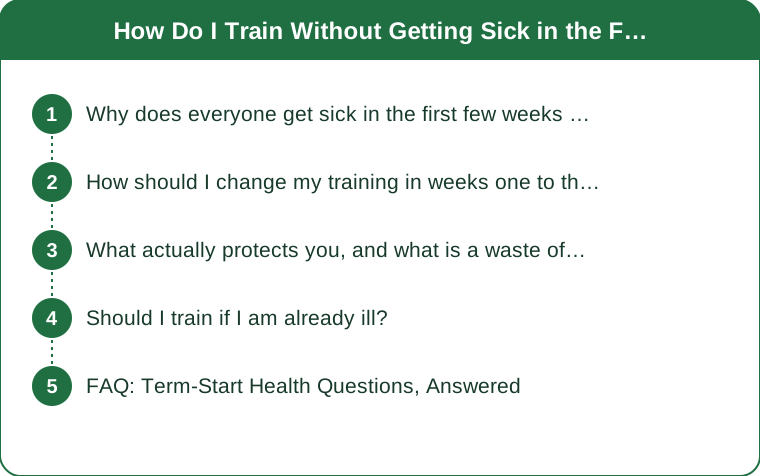
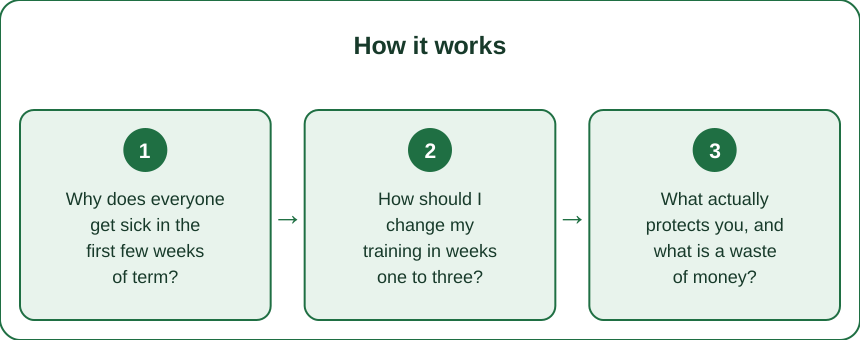
Why does everyone get sick in the first few weeks of term?
Four things arrive simultaneously, and each one independently raises infection risk.
Novel contact density. You have moved into a building with people who have arrived from dozens of different places, each carrying a different set of common viruses. Your immune system has not seen most of them. This is the single largest factor and it is unavoidable - it is why the same pattern shows up at the start of every academic year, everywhere.
Sleep disruption. Short sleep is one of the most consistently demonstrated risk factors for catching a respiratory infection. People sleeping under about six hours a night have been shown in controlled exposure studies to be several times more likely to develop a cold than those sleeping seven or more. First weeks of term are almost universally short-sleep weeks.
Stress load. Not the abstract kind - the practical kind of managing a new place, new people, new admin, and new deadlines all at once. Sustained stress alters immune function in ways that are well documented.
And then, frequently, a training spike. New gym access, motivation high, so training volume doubles in a week. Hard exercise produces a temporary period of reduced immune defence, and while a single session is not a meaningful risk, repeated hard sessions on inadequate sleep and high stress is a different picture.
Any one of these is manageable. All four in the same fortnight is why week three is when the halls sound like a chest clinic.
How should I change my training in weeks one to three?
Not by stopping. Regular moderate exercise is associated with fewer respiratory infections, not more - the relationship is roughly U-shaped, with sedentary and very high loads both worse than moderate.
Cap hard sessions at two per week. Hard means genuinely hard: intervals, a heavy lifting session, a long run at pace, a competitive game. Two of those in a week with everything else going on is plenty. Fill the rest with easy work - walking, easy cycling, a moderate lift, mobility.
Do not start a new programme in week one. Give yourself until week three or four, when sleep and schedule have stabilised, then start. A programme begun on top of an unstable base is the one that gets abandoned.
Keep the frequency, drop the intensity. Showing up five days a week matters for habit formation, which is the real goal of the first month. Making five of those sessions hard does not.
Train earlier in the day if you can. Late evening high-intensity sessions push back sleep onset, which attacks the one variable you most need to protect.
Watch your resting heart rate if you track it. A resting heart rate five to ten beats above your normal for two consecutive mornings is a reasonable signal to make that day easy. It is not a perfect measure, but it is better than guessing, and it often flags something a day before you feel it.

What actually protects you, and what is a waste of money?
The evidence is fairly clear on both sides of this, and it is not the side the supplement aisle would prefer.
What genuinely helps:
- Sleep, above everything else. Seven hours minimum, aiming for eight. This is not a lifestyle suggestion - it is the intervention with the strongest evidence behind it, and it beats every product on the shelf.
- Hand washing. Ordinary, boring, and effective. Particularly before eating in a dining hall and after using shared spaces.
- Not sharing drinks and water bottles. Extremely common in first weeks, extremely effective at transmission.
- Eating enough total food. Under-eating while training and stressed suppresses recovery and immune function. This is a common pattern in first term when meals get skipped around timetables.
- Getting outside daily. Both for daylight, which anchors your sleep timing, and because indoor crowding is where transmission happens.
What has limited evidence:
- Vitamin C. Regular supplementation does not appear to prevent colds in the general population, though it may slightly shorten duration. Taking it once you already feel ill does very little.
- Most immune-boosting blends. The claim is largely unregulated. If your diet is reasonable, the ingredients are not the limiting factor.
- Vitamin D is the partial exception. If you are deficient - more likely in autumn and winter, and more likely if you are indoors most of the day or have darker skin - supplementation has been associated with reduced respiratory infection risk. That is a reason to ask a doctor about testing, not to take a random dose. This is general information, not medical advice.
Should I train if I am already ill?
The commonly used guideline is the neck check, and it is a reasonable starting point with two important caveats.
Symptoms above the neck - a blocked or runny nose, sneezing, mild sore throat, no fever - generally mean light exercise is acceptable. Keep it easy, keep it short, and skip anything hard. If you feel worse fifteen minutes in, stop and go home.
Symptoms below the neck - chest congestion, a productive cough, body aches, fever, stomach upset - mean no training. None. Not a light session.
The first caveat: fever means stop, unambiguously. Exercising with a fever raises core temperature further, increases dehydration risk, and in rare cases is associated with cardiac complications when a virus involves the heart muscle. This is the one line not to test.
The second: fatigue that is out of proportion. If you are exhausted in a way that does not match your training load, treat that as a below-the-neck symptom regardless of what your nose is doing.
Coming back afterwards. Return at roughly half your previous volume for the first few sessions and build back over about a week. If you were ill for four days, do not resume at the level you left. The most common way a one-week illness becomes a three-week write-off is going straight back to a hard session on day one of feeling better.
And see a doctor if: a fever lasts more than three days, breathlessness is unusual for you, chest pain occurs, or symptoms improve and then get sharply worse. Campus health services exist specifically for this and are usually much easier to access than people assume.
FAQ: Term-Start Health Questions, Answered
Why do so many students get sick in the first month?
Dense new social contact with unfamiliar viruses, short sleep, high stress, and often a sudden jump in training volume all arrive in the same fortnight. Each independently raises infection risk.
Can I work out with a cold?
Light exercise is generally fine with above-the-neck symptoms and no fever. Stop entirely for chest symptoms, body aches, or any fever, and return at about half your usual volume for the first few sessions afterwards.
Does exercise weaken your immune system?
Regular moderate exercise is associated with fewer respiratory infections. Repeated hard sessions on inadequate sleep and high stress is a different situation - that is the combination worth avoiding in weeks one to three.
TL;DR:
- Four risks stack in the first fortnight: new contacts, short sleep, stress, and a training spike.
- Keep hard sessions to two a week for the first three weeks and hold frequency rather than intensity.
- Sleep, hand washing, not sharing bottles, and eating enough beat every supplement on the shelf.
- Above the neck and no fever means light training is fine; below the neck or any fever means stop.
The people who train consistently all year are rarely the ones who went hardest in week two. They are the ones who were still healthy in week five.
Keep Reading
This article is for general informational and styling purposes only. Fit, sizing, and product availability may vary.