Schedule Cardio: Building Fitness Into Your Class Route
Quick Answer: Your class schedule can hand you 10,000+ steps a day without a single gym visit — just take the long way between buildings, choose stairs over elevators, wear your backpack correctly, and add one evening lap for good measure. The campus is already a walking course; you’re just choosing to use it.
Your class schedule is secretly a fitness plan drawn by someone who hates direct routes. Campus distances plus a few deliberate choices add up to five figures of daily steps, and the university is already charging thousands of dollars for this walking course — you might as well use it.

How many steps can you get from walking to class?
More than most students realize. Between back-to-back classes, dining hall trips, and library runs, a normal class day can easily rack up 6,000-10,000+ steps — before you’ve made a single intentional choice to walk more. Add a bit of route stacking and it climbs from there.
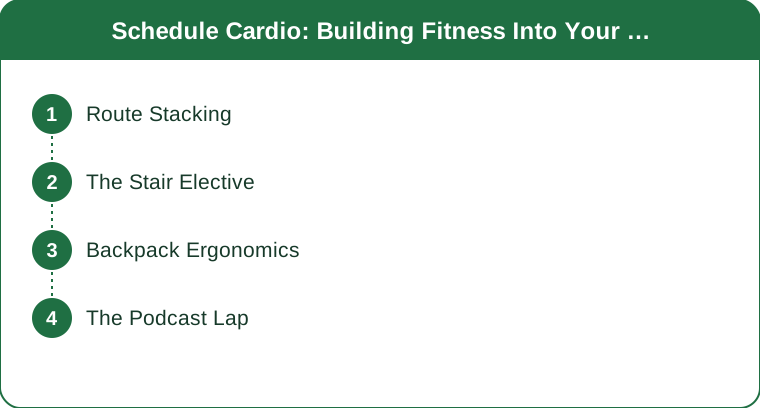
What is “route stacking” and how do you use it?
Route stacking just means taking the long way on purpose. The scenic loop between buildings adds maybe five minutes and a thousand extra steps — a fair trade for fresh air and a mental reset between classes.
- Fifteen-minute gaps between classes are walking gaps, not phone-scrolling gaps.
- A library detour counts double if the building has stairs.
- Loop around a quad or courtyard instead of cutting straight across, especially on nice days.
None of this requires extra time in your day — you’re already walking to class either way. Route stacking just makes the walk count for more.
Are stairs really worth taking over the elevator?
Yes, and it adds up faster than it feels like. Elevators are best reserved for moving furniture. Every stairwell you take is leg day in installments — climbing four flights to a lab, twice a week, quietly becomes a semester-long stair program that never showed up on the course catalog.
A few ways to make stairs a habit instead of a chore:
- Default to stairs for anything under 4-5 flights; save the elevator for genuinely heavy loads.
- Take them at a conversational pace — this isn’t a race, it’s a habit.
- If your knees or joints protest on stairs, that’s worth mentioning to a doctor or physical therapist rather than pushing through pain.

How should you wear your backpack so it doesn’t wreck your back?
Both straps, always. The one-shoulder tilt is basically a chiropractor’s college fund waiting to mature. Keep the heavier items close to your back, and try to keep total pack weight under roughly 10% of your body weight.
A few backpack basics worth following:
- Use the waist or sternum strap if your bag has one — it redistributes weight off your shoulders.
- Pack dense items (laptop, textbooks) closest to your spine, lighter items further out.
- A well-loaded, well-worn backpack effectively turns your walk to class into light rucking — a free bonus workout you’re already doing anyway.

Is one evening walking lap actually worth it?
It is, mostly because it’s sustainable. One evening lap around campus with a podcast or playlist unwinds the day, banks roughly 2,000 more steps, and reliably beats another 30 minutes of doom-scrolling in a beanbag chair. Campus tends to be prettiest at golden hour anyway, so attendance is recommended.
Myth vs Fact: Campus Walking
Myth: You need a gym membership to stay active in college. Fact: A dense campus with stairs, quads, and long hallways can cover a meaningful chunk of your daily activity goal without ever swiping into the rec center.
Myth: Walking “doesn’t count” as real exercise. Fact: Consistent daily walking supports cardiovascular health, mood, and energy levels, and it’s one of the easiest habits to actually stick with long-term — which matters more than any single “harder” workout you skip.
Myth: A heavy backpack is just part of student life you have to accept. Fact: Proper packing and both-strap habits can meaningfully cut the strain, and persistent back or shoulder pain is worth mentioning to a doctor rather than shrugging off for four years.
Mini FAQ
How many steps a day is considered healthy for a student?
Many general health guidelines point to somewhere around 7,000-10,000 steps a day as a solid target for most adults, though the “right” number varies by person. A campus schedule with some route stacking can get you into that range without extra dedicated workout time.
Does taking the stairs really make a difference over the elevator?
Yes — consistently choosing stairs for a few flights, several times a day, adds up to real cardiovascular and leg-strength benefits over a semester, similar to a light, ongoing stair-climbing habit.
Can walking to class replace a gym workout?
It can cover a good chunk of daily movement and cardio, but it’s not a full substitute for strength training or targeted workouts. Think of it as a strong baseline of activity that other exercise builds on top of, not a total replacement.
TL;DR
- Class-to-class walking alone can bank 6,000-10,000+ steps a day.
- Route stack: take the longer, scenic path during gaps between classes.
- Take the stairs for anything under 4-5 flights instead of the elevator.
- Wear your backpack on both straps, heavy items close to your back, under ~10% of body weight.
- Add one evening lap with a podcast for an easy extra 2,000 steps.
- If stairs or a loaded backpack cause ongoing pain, check in with a doctor or physical therapist.
Keep Reading
This article is for general informational and styling purposes only. Fit, sizing, and product availability may vary.